Shedding & grooming
Surviving the coat blow: a field manual
Two to four weeks, twice-ish a year, on the dog's schedule: what the blow looks like, the interception plan, and when the fur means something else.
Nelson and Kim, Curious Tails · AVS licence AS24J00046
How do I survive a corgi coat blow?
Recognise it by the two-finger tuft test, then switch to daily 10-minute rake sessions plus one mid-blow bath-and-blow-dry, run the robot vacuum daily, brush outside the aircon airflow, and wait it out: 2–4 weeks, then a denser new coat. Never shave, and involve a vet only if skin looks angry or thinning is symmetrical.
What a coat blow is, and what it looks like mid-flight
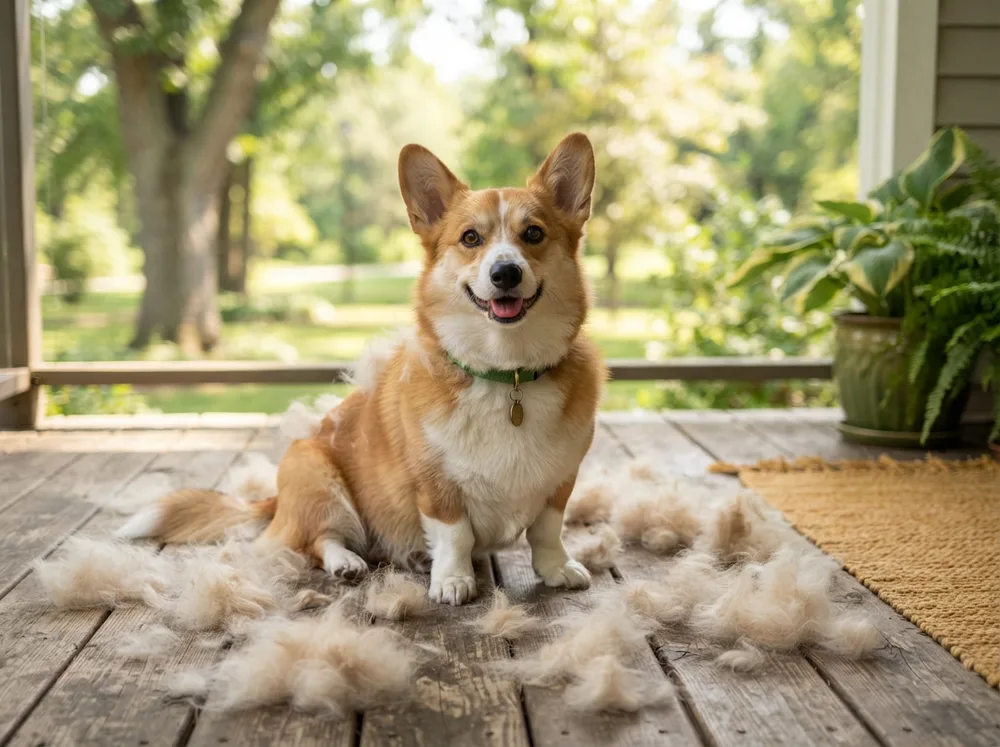
A coat blow is the double coat's scheduled demolition: the dense undercoat releases wholesale over two to four weeks, a proper moult making room for its replacement, while the guard-hair jacket stays put. It is dramatically different from background shedding, and the first sight of it converts every new owner into a WhatsApp message to our care line.
Day to day it looks like this: loose tufts you can pluck free with two fingers, fur releasing in satisfying sheets under the rake, drifts collecting along skirting boards within hours of vacuuming, and, mid-blow, a distinctly scruffy dog, coat lumpy with lifting undercoat, sometimes visibly patchy at the britches and flanks where the old coat has left and the new one is still arriving.
All of it is normal. The dog is not sick, not stressed and not balding; it is renovating.
The classic trigger calendar, big spring blow, smaller autumn one, belongs to temperate latitudes and their shedding season logic.
In Singapore's seasonless, aircon-conditioned life, blows keep happening but lose their punctuality: many corgis here run steadier year-round shedding with softer, less predictable blowouts, cued by things other than weather, age milestones, hormone cycles in intact females (a blow commonly follows each heat), a hormone shift such as a spay, whose coat reset often follows sterilisation, even a house move.
The practical translation: do not diarise the blow, recognise it. The two-finger tuft test is your calendar.
Blow vs background shedding
- Tufts pluck free by hand: blow
- Rake yields fur in sheets: blow
- Scruffy, lumpy, patchy coat: blow
- Duration: 2–4 weeks, then done
- SG timing: irregular, hormone/life-cued
- Skin under patches looks healthy: normal
The survival plan: dog side
When the tuft test comes back positive, your dog is blowing coat; flip the grooming system from cruise to combat. The three-times-weekly routine becomes daily brushing, a short session, ten minutes is plenty, because during a blow the rake is absurdly productive and the goal is interception: every tuft the rake banks is a tuft the sofa never sees.
Keep the usual order, rake with line brushing through the britches and flanks, slicker to finish, and go gently: blow-season skin is busy underneath, and pressure earns nothing the schedule does not already deliver.
Deploy the single most effective weapon once, mid-blow: the bath-and-blow-dry. Warm water and a gentle shampoo loosen the remaining undercoat's grip, a double-length rinse matters more than the lather, and then a cool-to-low-warm blow-dry while raking releases undercoat in quantities that feel like a magic trick, owners regularly fill a supermarket bag from one session.
If your bathroom, dryer or nerves are not up to it, this is the one step worth outsourcing: a professional deshed ($80 to $120) mid-blow shortens the whole event noticeably, and one per blow is all most coats need.
What not to do, ever, no matter how tempting the shortcut looks in week two: shave. The blow ends on its own; the shaved coat's problems do not, and our shedding pillar explains that physics in full.
Every tuft the rake banks is a tuft the sofa never sees. Interception is the whole strategy.
The survival plan: house side
The household war has its own front. Vacuum small and daily rather than big and weekly: a robot vacuum on a daily schedule keeps the drift layer at zero while you sleep (our robot-vacuum guide covers what the machines honestly manage), with a proper corded vacuum for the weekend deep pass over rugs and sofa seams.
Mind the aircon: circulating air parks fur on every cool surface in the room the unit serves, so during a blow, brush the dog on the balcony or service yard, not in the airflow, and rinse the aircon filters weekly, they mat with undercoat surprisingly fast, and a clogged filter is a real cost hiding inside a grooming story.
Fabric management, learned from a hundred households: one lint roller per room plus one in the car beats one heroic roller hunted through drawers; a washable throw over the dog's favourite sofa corner converts furniture cleaning into a laundry load; and dark work clothes leave the flat in a garment bag during blow weeks, a tip that sounds excessive until the first client meeting conducted with fur everywhere on a blazer.
Fluffies run the same playbook at higher intensity, longer fur travels further and mats besides, so their daily blow sessions include the comb audit without fail. None of this is difficult; all of it is relentless for a fortnight. Then, genuinely, it stops.
When a "blow" is not a blow, and the reassurance ledger
The blow's one real risk is that it teaches owners to normalise fur loss, so here is the boundary line. A blow leaves healthy skin and an even story: fur releases diffusely or in the classic zones, the skin beneath looks calm and pale, and the dog itself is unbothered.
See a vet, not a groomer, when the pattern breaks: truly bald patches with visible skin, symmetrical thinning along flanks or tail, skin that is red, flaky, dark, smelly or scabbed, relentless scratching or licking at one site, or a "blow" that runs past six weeks without the new coat arriving.
Those patterns speak of skin infections, parasites, allergies or hormone conditions, all manageable, none of them grooming problems, and a photo sent to your vet early is the cheap version of every one of those stories.
And the reassurance ledger for first-blow week, because the care line hears these exact worries every time: yes, the volume is normal; yes, patchy hindquarters mid-blow are normal; yes, the puppy's first blow, usually somewhere between six months and a year as the puppy coat converts to the adult one, is often the messiest of its life; yes, intact females may repeat the show after each heat; and yes, it ends, two to four weeks, on the dog's schedule rather than yours, with a denser, glossier coat as the receipt.
Take the "before" photo. The "after" coat is the breed's quiet apology for the fortnight, and it is a good one.
Keep exploring
Frequently asked questions
How long does a corgi coat blow last?
Two to four weeks, typically. Fur releases in tufts and sheets, the dog looks scruffy mid-blow, and a denser new coat closes the event. Past six weeks with no new coat arriving, involve your vet.
When do corgis blow coat in Singapore?
Irregularly. Without winter cues and with constant aircon, blows here follow hormones, sterilisation, age milestones and life events more than any calendar. Diagnose by the two-finger tuft test, not the month.
Is patchy fur during a blow normal?
Yes, especially at the britches and flanks, provided the skin beneath looks calm and healthy. Bald patches with angry, flaky or smelly skin are a vet matter, not a blow.
How often should I brush during a blow?
Daily, ten gentle minutes: rake with line brushing, slicker finish. Plus one bath-and-blow-dry mid-blow, the single most productive session of the whole event.
Can I speed a blow up?
Only by extraction: daily raking and the mid-blow bath genuinely shorten the mess by intercepting fur early. Nothing in a bottle reschedules a moult, and shaving trades a fortnight of fur for a damaged coat.
When is the first blow?
Usually between six months and a year, as the puppy coat converts to adult, and it is often the messiest one. A female’s first heat commonly brings another; sterilisation can trigger a one-off coat reset too.
Do fluffies blow worse?
Same undercoat volume, longer wrapper: the fur travels further and mats besides. Run the daily blow routine plus a comb audit, and consider the professional deshed non-optional.
Meet your Corgi
Come say hello at Balestier
2 Balestier Road #01-701, Singapore 320002 · Weekdays 12pm–6pm · Weekends 10am–6pm. Or message us first: tell us about your home and routine, and we'll tell you honestly if a Corgi fits.
Still deciding?
Read the price guide first: every dollar explained, no surprises at the shop.
See the price guide