The signature truth
Corgi shedding: the fur forecast is permanent
Double coat, daily fur, spectacular blowouts, and a tropical twist nobody warns you about. Here is the whole shedding story, told by people who repeat it before every sale.
Nelson and Kim, Curious Tails · AVS licence AS24J00046
Do corgis shed a lot?
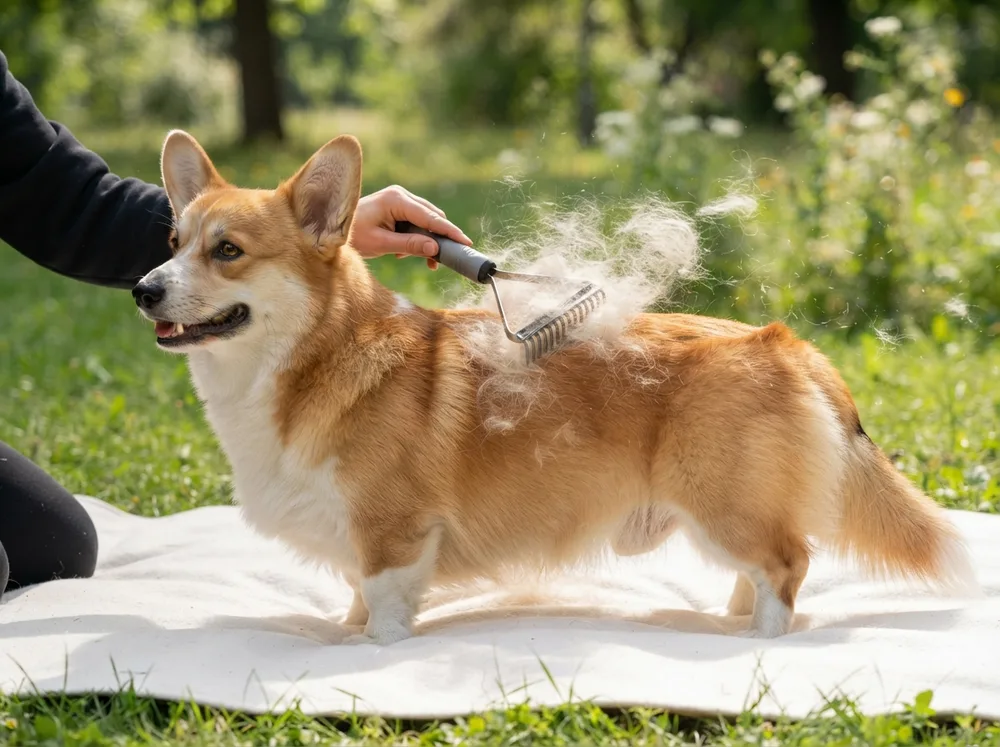
Yes, seriously and permanently: a double coat sheds daily year-round, with concentrated coat blows on top. In Singapore, aircon and the missing winter often smear this into constant moderate shedding with softer blowouts. Manage it with an undercoat rake three times weekly, and never shave a double coat: it removes the dog’s heat and sun protection without stopping the shedding.
How much do corgis shed? The number nobody prints
Somewhere between "a lot" and "check the vacuum warranty". The Corgi is a double-coated breed: a soft, dense undercoat for insulation beneath a weatherproof jacket of longer guard hairs. Double coats shed continuously as undercoat turns over, then stage the famous coat blow, a concentrated moult where the undercoat releases in handfuls, classically twice a year, lasting two to four weeks at a time.
During a blow you can groom a grocery bag of fur off one medium-sized dog and the dog will look mildly deflated and entirely smug about it.
We put this page in the site's core, above prettier topics, because shedding is the number one thing corgi owners everywhere complain about and the number one thing sellers everywhere undersell. Browse any corgi community and the wallpaper is fur: fur drifts, fur outlines where the dog slept, fur in the butter somehow.
Every buyer of ours hears the same sentence before money moves: if fur on your clothes and floor genuinely bothers you, do not buy this breed, because the fur is not a phase.
Shedding at a glance
- Double coat: undercoat + guard hairs
- Sheds every day of the year
- Coat blows: heavy moults, 2–4 weeks
- Fluffies shed and mat more, not less
- Not remotely hypoallergenic
- Never, ever shave (see below)
The Singapore twist: what the tropics do to a double coat
Classic shedding advice assumes seasons: a big spring blow to drop the winter coat, a smaller autumn one to make room for it. Singapore has no winter to prepare for, and most Corgis here commute between 31-degree afternoons and 22-degree air-conditioned living rooms several times a day.
The coat's scheduling system reads those signals and, in many dogs, smears the calendar: instead of two crisp blows, owners commonly report steadier year-round shedding punctuated by softer, less predictable blowouts, sometimes triggered by nothing more seasonal than a hormone cycle or a house move. Day length matters to the moult clock as much as temperature, and equatorial day length barely changes, which flattens the cycle further.
Practically, this changes your strategy from "survive two annual events" to "run a permanent low-grade fur economy". The owners who cope best here brush briefly and often rather than heroically and rarely, keep one lint roller per room and one in the car, and accept the aircon-loving dog's right to redistribute undercoat across every cool tile in the house.
The ones who struggle are almost always the ones who expected the internet's twice-a-year schedule and assumed something was wrong with the dog. Nothing is wrong with the dog. The dog is wearing a Welsh mountain wardrobe on the equator, and managing it is simply part of the deal you struck for those ears.
Singapore corgis do not skip the moult. They spread it across the whole calendar and call it a lifestyle.
Never shave a double coat, especially not in this heat
Every hot season, somebody shaves a corgi with the kindest intentions, and every groomer and vet who sees the result winces. The logic feels airtight, less fur, cooler dog, and it is wrong, because a double coat is not a sweater: it is a two-way insulation system. The undercoat traps a boundary layer of air that slows heat gain from outside; the guard hairs block direct sun from reaching skin.
Shave it and you remove the dog's shade and its air gap at once, exposing pink skin to UV, and you do not even win the fur war, because shedding continues at skin level as stubble. Worse, clipped double coats regrow badly: undercoat outpaces guard hair, producing the matted, felty "clip coat" that sometimes never fully recovers.
A corgi's real heat strategy is behavioural and yours to manage: walks in the early morning and evening windows, shade and water always, aircon or a cool tile floor for the afternoon, and a lean body weight, because fat is genuine insulation of the unhelpful kind.
A well-brushed double coat with the dead undercoat raked out is the coolest coat this breed can wear. The clippers make everything worse; the rake makes everything better. Our heat and double coat guide covers the full hot-day playbook, including the pavement test for paw-safe walking hours.
Shaving a corgi in the tropics
- Removes sun protection: sunburn risk on pink skin
- Destroys the insulating air layer that slows heat gain
- Shedding continues anyway, as stubble
- Regrowth often mats into a permanent "clip coat"
- The cooler option is raking the undercoat, not removing the coat
Tools that work, and tools that are theatre
The corgi grooming aisle is deep and mostly optional. What earns its shelf space, in the order we would buy it: an undercoat rake, the single non-negotiable tool, whose long rounded teeth pull dead undercoat out painlessly and account for most of the fur you will ever remove; a slicker brush for the top coat, feathering and finish work, and for fluffies, mat patrol behind the ears and in the britches; and a simple metal comb to audit your own work, if the comb snags, the rake missed a layer.
During blows, a bath with a proper rinse followed by a thorough blow-dry releases spectacular quantities of loosened undercoat in one session; many owners schedule exactly one professional deshed per blow for this reason, at roughly $80 to $120, and do maintenance themselves between.
The theatre shelf: shedding-stopper supplements (a good diet already covers coat health; nothing in a jar switches off a moult), "hypoallergenic corgi" anything (no such dog exists), and shave-adjacent gadgets that cut coat rather than extract it, which buys tidiness now at the price of coat damage later.
Blade-style "deshedding" tools that slice guard hair sit in the grey zone: effective-looking, but they trim the jacket rather than emptying the undercoat, and a rake does the real job kinder. Diet does matter at the margins, a quality food with decent omega fats grows a coat that releases cleanly instead of crumbling, and any sudden patchy or symmetrical fur loss is a vet conversation about skin, hormones or parasites, not a grooming problem at all.
The honest weekly rhythm for Singapore: ten to fifteen minutes with the rake three times a week, slicker finish for the fluffy, one audit comb-through, and a robot vacuum running daily because you will lose the floor war otherwise.
That routine, started in puppyhood so the dog treats the rake as a massage, keeps a tropical corgi's coat healthy and your household relationship with fur merely ironic rather than adversarial.
What we tell buyers before they pay
Shedding disclosure is a standing part of our pre-sale conversation, right beside the housing question. Buyers hear the volume truthfully, fluffy buyers hear the upgraded version (longer fur sheds longer fur, and mats besides), and anyone visibly recalculating gets our blessing to choose a lower-shedding breed instead; we would rather lose the sale than meet the dog again in a rehoming post.
Every puppy goes home with the starter kit's grooming basics and our care line on speed dial for the first blow panic, which arrives, reliably, with a message that says "is this NORMAL?" and a photo of a fur pile the size of a second corgi. It is normal. It is the breed. The ears are worth it.
Keep exploring
Frequently asked questions
Is corgi a high maintenance dog?
On grooming and exercise, yes. The double coat sheds year-round and blows out heavily twice a year, so brushing is a standing commitment rather than an occasional chore, and the breed needs real daily walks plus brain work. On temperament it is easy: intelligent, food-motivated and quick to learn. The maintenance is in the coat and the energy, not the character.
Are corgi dogs easy to take care of?
Easy to train, demanding to groom. A Corgi learns fast and wants to work with you, which makes the basics straightforward even for a first-time owner. The workload sits elsewhere: undercoat raking through the year, a heavier routine during the two annual coat blows, weight kept lean to protect the back, and walks scheduled around Singapore’s heat rather than your convenience.
How much do corgis shed?
Heavily and daily, with concentrated coat blows on top. Double-coated breeds turn over undercoat year-round; during a blow you can remove grocery-bag quantities across two to four weeks. If fur is a dealbreaker, this is the wrong breed.
Do corgis shed differently in Singapore?
Commonly yes. With no winter and constant aircon transitions, many corgis here shed steadily all year with softer, less predictable blowouts instead of two crisp seasonal moults. Plan for a permanent routine, not two annual events.
Can I shave my corgi to keep it cool?
No. The double coat insulates against heat and sun; shaving removes both protections, keeps the shedding as stubble, risks sunburn, and often ruins regrowth. Rake out dead undercoat instead: that is the genuinely cooler coat.
What tools actually work?
An undercoat rake first, a slicker brush second, a metal comb to audit. During blows, a bath plus thorough blow-dry releases huge amounts of undercoat. Skip shedding supplements and anything that cuts coat rather than extracting it.
How often should I brush?
Ten to fifteen minutes, three times a week, daily during blows. Little and often beats heroic monthly sessions, and puppies taught early treat the rake as affection.
Do fluffy corgis shed more?
They shed the same undercoat wrapped in longer fur, which tangles and mats besides. Practically: more grooming, more visible fur, same source. We price fluffies identically and brief their owners accordingly.
Are corgis hypoallergenic?
Not remotely. No corgi is. Allergy-sensitive households should meet an adult corgi before committing, or honestly consider a low-shedding breed instead.
When is shedding a warning sign?
Even heavy shedding leaves an even coat behind. Bald patches, symmetrical thinning, flaky or smelly skin, or sudden loss outside a blow pattern deserve a vet visit: those are skin, hormone or parasite questions, not grooming ones.
Meet your Corgi
Come say hello at Balestier
2 Balestier Road #01-701, Singapore 320002 · Weekdays 12pm–6pm · Weekends 10am–6pm. Or message us first: tell us about your home and routine, and we'll tell you honestly if a Corgi fits.
Still deciding?
Read the price guide first: every dollar explained, no surprises at the shop.
See the price guide