Shedding & grooming
The deshedding routine that keeps pace with a corgi
Fifteen minutes, three tools, three times a week: the whole system, in the order that makes it work.
Nelson and Kim, Curious Tails · AVS licence AS24J00046
How do I deshed a corgi properly?
Run a 15-minute session, three times weekly: hands-on check, then undercoat rake with line brushing (britches and hindquarters first), then slicker brush, then a metal-comb audit of the mat zones. Go daily during coat blows and add one bath-with-blow-dry mid-blow. Skip gloves, blade tools and supplements; the rake does the real work.
The fifteen-minute session, step by step
A working deshedding routine is short, ordered and boringly repeatable, which is exactly why it works. Here is the fifteen-minute session we teach every buyer, in the tool order that matters. Minute zero to two: hands. Run your fingers against the coat's grain over the whole dog, britches, behind the ears, armpits, tail base. You are mapping today's loose-fur zones and checking for mats, ticks and skin changes; the hands find what the brush would snag.
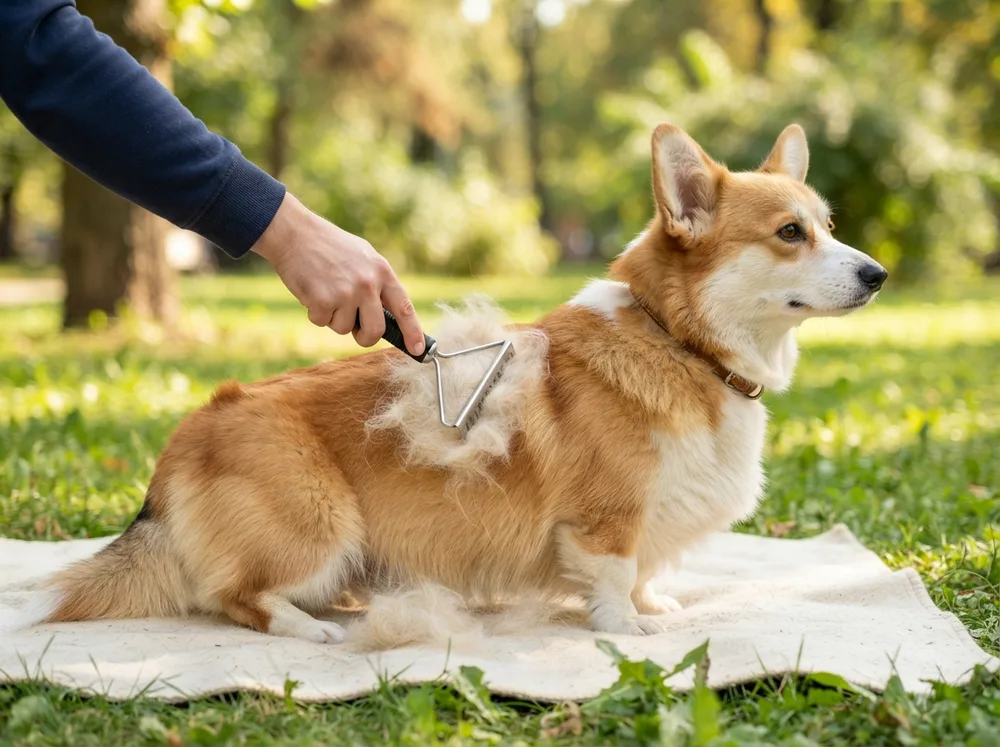
Minutes two to ten: the undercoat rake. Work with the grain in long, relaxed strokes, section by section, hindquarters and britches first (the fur motherlode), then back, sides, chest, neck.
Use line brushing on the dense zones: lift a band of coat with your free hand and rake the layer beneath it, so the tool reaches undercoat instead of skating over guard hairs. Stop each zone when the rake starts coming back light.
Minutes ten to thirteen: the slicker brush. Lighter pressure, same order, catching what the rake lifted loose and finishing the top coat; on fluffies, give the feathering and britches their own dedicated slicker minutes.
Minutes thirteen to fifteen: the metal comb audit. Glide it through the spots that mat first, behind the ears, armpits, britches. If the comb runs clean, you are done; if it snags, return to that spot with the slicker, and if the snag is a true mat, work it loose from the tip inward with fingers and slicker, never scissors pointed at skin.
That is the whole session. No heroics, no hour-long marathons, just a closed loop that empties the undercoat faster than Singapore refills it.
The session at a glance
- 0–2 min: hands, mapping and mat check
- 2–10 min: undercoat rake, line brushing
- 10–13 min: slicker brush finish
- 13–15 min: metal comb audit
- Order matters: rake before slicker
- Stop when tools come back light
The weekly calendar for a seasonless coat
Because Singapore corgis shed on a smeared, season-free schedule, the calendar is steady-state: three fifteen-minute sessions a week, spaced roughly Monday, Thursday, weekend, and that cadence holds the fur economy for most standard coats. Fluffies upgrade to four sessions or add a five-minute daily feathering pass, their mat clock runs faster than their shed clock.
During a coat blow, whenever your dog's edition arrives, the routine flips to short daily sessions for the two-to-four-week duration, plus the single most productive move in the whole system: one bath-and-blow-dry mid-blow.
Bathe with a gentle dog shampoo, rinse twice as long as feels necessary, towel off, then blow-dry on cool or low warm while raking; the airflow releases astonishing sheets of loosened undercoat in one sitting. Many owners book exactly one professional deshed per blow ($80 to $120) for this step and keep everything else home-run.
Two placement details make the schedule sustainable. First, location: brush on the balcony or service yard if you have one, or on an old bedsheet indoors, the sheet gathers the fur cloud and shakes out into the bin in one motion, and never brush directly under the aircon draft unless you enjoy redecorating.
Second, timing: after the evening walk beats before it, the dog is walked-out, warm and relaxed, and a spent corgi treats brushing as a massage rather than a wrestling event.
Three short sessions beat one heroic one, every week of the year. The rake wins on schedule, not on effort.
Teaching the dog to love it (start in week one)
The difference between a corgi that queues for the rake and one that flees it is almost entirely conditioning, and the window is wide open when the puppy comes home at week nine. The protocol is cheap: for the first fortnight, sessions are two minutes long, on a towel that only appears for grooming, with treats flowing at a rate your vet would raise an eyebrow at.
Rake twice, treat, release. The towel becomes a slot machine, the rake becomes its lever, and by month three you have a dog that hears the drawer open and assumes position.
Add handling drills inside the same sessions, paws held, ears lifted, tail touched, and you are simultaneously pre-training every future vet visit and nail trim.
Adult rescues or rake-suspicious dogs get the same program stretched longer: shorter sessions, higher pay, and the cardinal rule that the session ends before the dog wants it to.
Force is the one tool that never earns back its cost; a corgi wrestled through grooming learns to dread the towel, and you inherit a decade of three-times-weekly wrestling. Fifteen quiet minutes, paid in chicken, three times a week: that is the entire secret, and it is cheaper than any gadget on the market.
What not to buy, and when to outsource
The routine above needs three tools totalling well under a hundred dollars, which the pet-fair aisle finds unsatisfying, so here is the skip list. Deshedding gloves: pleasant for the dog, cosmetic for the coat, they lift surface fur and leave the undercoat untouched; fine as a bonding extra, useless as the engine.
Blade-style shedding tools: they cut guard hair rather than extracting undercoat, buying today's tidiness with a damaged jacket that regrows patchy. Shedding supplements: a decent diet already covers coat health, and nothing in a jar reschedules a moult.
Vacuum grooming attachments: heroic in adverts, and the sound sends most corgis into the next postal district; if yours tolerates one, treat it as a slicker substitute, not a rake.
Outsource on three honest triggers: the mid-blow bath-and-blow-dry if your bathroom or patience cannot host it; any matting beyond finger-and-slicker rescue, especially on fluffies, where a groomer's dematting is kinder than your scissors; and skin findings, flakes, smells, bald patches, hot spots, which are a vet visit wearing a grooming costume.
Otherwise, the routine is yours, the fur is manageable, and the dog is fifteen minutes of chicken-funded massage away from its best coat. Our shedding pillar covers the biology behind all of it; this page is just the part you do on Tuesday.
Keep exploring
Frequently asked questions
What is the ideal deshedding routine?
Fifteen minutes, three times weekly: two minutes of hands-on mapping, eight of undercoat rake with line brushing (britches first), three of slicker finish, two of metal-comb audit. Daily short sessions during coat blows, plus one bath-and-blow-dry mid-blow.
What order do the tools go in?
Rake first (it does the real extraction), slicker second (catches and finishes), comb last (audits). Reversing the order makes the slicker fight fur the rake should have removed.
What is line brushing?
Lifting a band of coat with your free hand and brushing the layer beneath it, section by section, so tools reach the undercoat instead of skating over the top. It is the difference between grooming the dog and grooming the surface.
Wet or dry brushing?
Dry for routine sessions. The exception is the mid-blow bath: wash, rinse thoroughly, then rake while blow-drying on cool, which releases undercoat in sheets.
Can I over-brush?
With a rake and slicker used at sane pressure, practically no; stop each zone when the tool comes back light. Raw skin or brush-burn means too much pressure, not too much frequency.
How do I make my corgi enjoy it?
Condition from week one: two-minute towel sessions, heavy treats, end before the dog wants to. The towel becomes a slot machine and the adult dog queues for grooming.
Do fluffies need a different routine?
Same engine, more minutes: four sessions weekly or a short daily feathering pass, with extra comb attention behind ears, armpits and britches, their matting outpaces their shedding.
Meet your Corgi
Come say hello at Balestier
2 Balestier Road #01-701, Singapore 320002 · Weekdays 12pm–6pm · Weekends 10am–6pm. Or message us first: tell us about your home and routine, and we'll tell you honestly if a Corgi fits.
Still deciding?
Read the price guide first: every dollar explained, no surprises at the shop.
See the price guide