Buying & living
The real cost of a corgi, met before the dog
Year one, the steady state, the emergency maths and the lifetime number: the whole ledger, written down the way we say it at the counter.
Nelson and Kim, Curious Tails · AVS licence AS24J00046
How much does owning a corgi really cost?
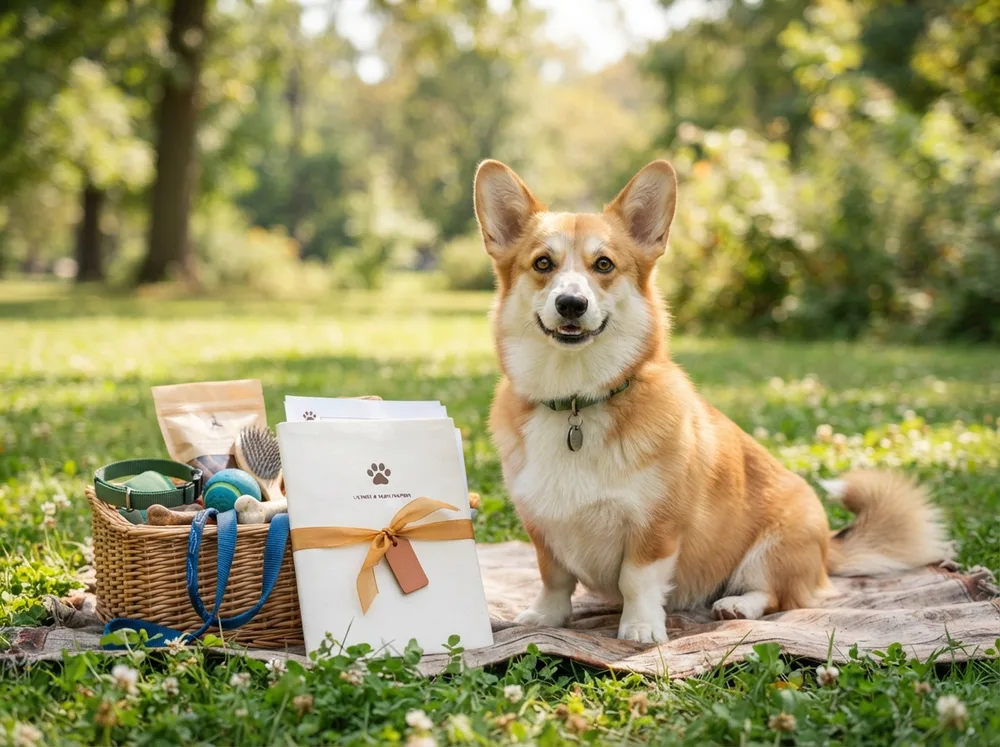
Year one including the $3,288–$4,488 all-in purchase: ~$6,000–$7,500. Steady state: $180–$320 monthly (food, preventives, vet, insurance). Add boarding or daycare to taste, keep a $2,000–$3,000 emergency fund plus IVDD-covering insurance bought young, and budget a lifetime figure of $40,000–$60,000 across 12–13 years.
Year one: the honest ledger
Year one is the expensive year, and pretending otherwise is how dogs end up resented, so here is the ledger with nothing folded under the rug.
It opens with the purchase: $3,288–$4,488 all-in at our shop, and "all-in" is doing real accounting work in that sentence, because it already contains what many buyers pay separately elsewhere: the vet health check, vaccinations to schedule, deworming, microchip, the 30-item starter kit itemized at $533, delivery with playpen setup, the first AVS-certified training lesson and the licence filing.
Buyers comparing quotes should do this arithmetic explicitly: a "$2,800 corgi" plus a thousand-odd in first-month essentials is not cheaper, it is the same money wearing a smaller sticker.
Then the year's remaining lines. Completing vaccinations (week 12, optional week 16): roughly $50 to $100 per visit. Sterilisation around month seven: several hundred dollars, commonly $300 to $800 by clinic and sex, and it flips the licence to the cheap tier ($13.50 a year, or $35 for life, versus $81 unsterilised).
Food for a growing ten-kilogram athlete: $80 to $120 monthly, call it $1,100 to $1,400 for the year. Home grooming gear beyond the kit, plus perhaps two professional desheds: $200 to $300. Insurance, if taken (we will argue for it below): $400 to $700 for the year.
Odds and ends that always happen, a replacement harness the puppy outgrew, a training class beyond the free one, the chewed slipper economy: honestly, $200 to $400. Year-one total, purchase included: broadly $6,000 to $7,500. Written down before purchase, that number builds confident owners; discovered incrementally, it builds resentful ones, which is why this page exists.
Year one at a glance
- Purchase, genuinely all-in: $3,288–$4,488
- Remaining jabs: $50–$100/visit
- Sterilisation: ~$300–$800 (once)
- Food: ~$1,100–$1,400/yr
- Insurance: ~$400–$700/yr
- Sundries and gear: ~$400–$700
- Year-one total: ~$6,000–$7,500
The steady state: years two to twelve
After year one the ledger settles into a rhythm, and the rhythm is manageable: most corgi households run $180 to $320 a month in the steady state. Food holds at $80 to $120. Preventives, tick, flea and heartworm protection, add $20 to $40 monthly. The annual vet package, booster plus wellness check, spreads to under $20 a month. Grooming stays mostly home labour with the rake, plus a professional deshed per coat blow if you outsource that ritual: $15 to $25 monthly amortised.
Insurance premiums sit at $30 to $60 monthly and creep upward with age. The licence, post-sterilisation, is a rounding error. Toys, chews and the replacement-economy of a determined herding jaw: $15 to $30.
Add it up and a decade of corgi runs roughly $2,500 to $3,800 a year, plus the services layer for your particular life: boarding at $40 to $80 a night for travel (our buyers get the first month free, and the free-boarding perk is worth actual money to frequent flyers), daycare at $30 to $60 a day or walkers at $20 to $35 a walk for long-office households.
Where owners overspend, reliably: gadget grooming tools the rake replaces, subscription toy boxes the dog triages into one favourite and a pile, boutique food upgrades with better marketing than nutrition, and puppy-era daycare five days a week when three plus a walker would do.
Where owners must never cut, equally reliably: preventives (the diseases they block cost thousands), the annual vet visit (early findings are cheap findings), food quality at the does-the-job tier, and the exercise budget, which costs time rather than money but whose deficit converts directly into destruction bills and, eventually, vet bills.
The corgi's cost profile rewards exactly one strategy: boring consistency on the essentials, cheerful stinginess on the theatre.
A corgi costs about as much as a daily kopi and toast set, for twelve years. The question is only whether you budgeted the kopi.
The emergency fund and the insurance argument
Now the chapter that separates a budget from a plan. Routine costs are predictable; veterinary emergencies are not, and for this breed the tail risks have names: intervertebral disc surgery runs into five figures in Singapore, a cruciate repair or a bad gastro week runs four, and the emergency clinic's overnight rate compounds quickly. Two instruments cover the exposure, and the honest answer for most households is both, sized sensibly.
The emergency fund: a dedicated $2,000 to $3,000 buffer, built during the cheap steady-state months, standing between your dog and a credit-card decision at midnight.
Insurance: $30 to $60 monthly bought young, before anything becomes a pre-existing exclusion, with the policy actually read: does it cover IVDD and orthopaedics, what are the annual and per-condition limits, what is the co-pay after age eight? A policy that answers those well converts the five-figure tail risk into a known premium, which is precisely what insurance is for.
The alternative arithmetic, self-insuring by banking the premium, works only for households disciplined enough to actually bank it and liquid enough to absorb a bad year early; for everyone else, the premium is the discipline.
What does not work is the default plan of no fund, no policy and hope, which functions right up until it becomes a euthanasia-versus-surgery conversation held over a calculator.
We have watched buyers on both sides of that hour. Buy the policy or build the fund, ideally both, and file this paragraph under the same honesty policy as the housing question: the uncomfortable version now beats the tragic version later.
The lifetime number, and what it buys
Total it across a typical twelve-to-thirteen-year span and the honest lifetime figure for a Singapore corgi lands between $40,000 and $60,000: purchase, a decade-plus of steady state, the services layer scaled to your travel and work life, and a realistic allowance for the medical events a long life includes.
Fluffy coats nudge the grooming line, not the total; body weight, kept lean, quietly discounts the medical line more than any other single choice. If that number startles, good, it should be met before the dog, not during year three, and it is broadly what any well-kept small-to-medium breed costs here; the corgi's premium over cheaper-to-buy breeds amortises to noise across a decade.
And what the money buys deserves the closing line, because a ledger without its asset column is just a bill.
Forty-odd thousand dollars, spread across four thousand mornings, purchases: the 7am escort who has never once been late, the doorbell press office, the beach-day zoomies, the herding of your children into their school shoes, the fox-brush flag at the end of every worst workday, and the twelve-year masterclass in showing up that this breed conducts free of charge on top of everything invoiced.
Cheaper hobbies exist. None of them meets you at the door. Budget honestly, buy from licensed sources, keep the dog lean and the fund funded, and the corgi turns out to be the rare purchase that appreciates.
Keep exploring
Frequently asked questions
How much does a corgi cost to own in Singapore?
Year one, purchase included: roughly $6,000–$7,500 (with our $3,288–$4,488 all-in covering the usual first-month extras). Steady state after: $180–$320 monthly. Lifetime, across 12–13 years: honestly $40,000–$60,000.
What is the realistic monthly budget?
Food $80–$120, preventives $20–$40, amortised vet and grooming $35–$45, insurance $30–$60, toys and chews $15–$30: call it $180–$320, before boarding, daycare or walkers for your particular lifestyle.
Is pet insurance worth it for a corgi?
For most households, yes, bought young and read carefully for IVDD and orthopaedic cover: disc surgery runs to five figures here. Pair it with a $2,000–$3,000 emergency fund; the combination converts tail risk into a known premium.
What costs surprise first-time owners?
Sterilisation ($300–$800), the aircon bill of a tropical double-coat household, boarding at $40–$80 a night, and the quiet compounding of preventives. All plannable, none optional.
Where can I safely economise?
Gadget grooming (the rake does it), toy subscriptions, boutique food marketing and excess daycare. Never on preventives, the annual vet visit, food quality or the exercise budget, those cuts all reinvoice themselves with interest.
Do fluffies cost more to keep?
Marginally: more home grooming time and perhaps an extra professional deshed yearly. Same food, same medical, same insurance, and with us, the same purchase price.
How does the all-in price change year one?
It front-loads the predictable costs: health work, kit, delivery, first lesson and licence arrive inside the sticker, so year one’s remaining lines are just jabs, sterilisation, food and insurance. Cheaper stickers elsewhere usually reassemble the same total in instalments.
Meet your Corgi
Come say hello at Balestier
2 Balestier Road #01-701, Singapore 320002 · Weekdays 12pm–6pm · Weekends 10am–6pm. Or message us first: tell us about your home and routine, and we'll tell you honestly if a Corgi fits.
Still deciding?
Read the price guide first: every dollar explained, no surprises at the shop.
See the price guide