Shedding & grooming
How often to groom a corgi: the whole calendar
Brush, bathe, dry, nails, ears, teeth, paws: every cadence on one page, tuned for humidity, with the costs and the one standing order.
Nelson and Kim, Curious Tails · AVS licence AS24J00046
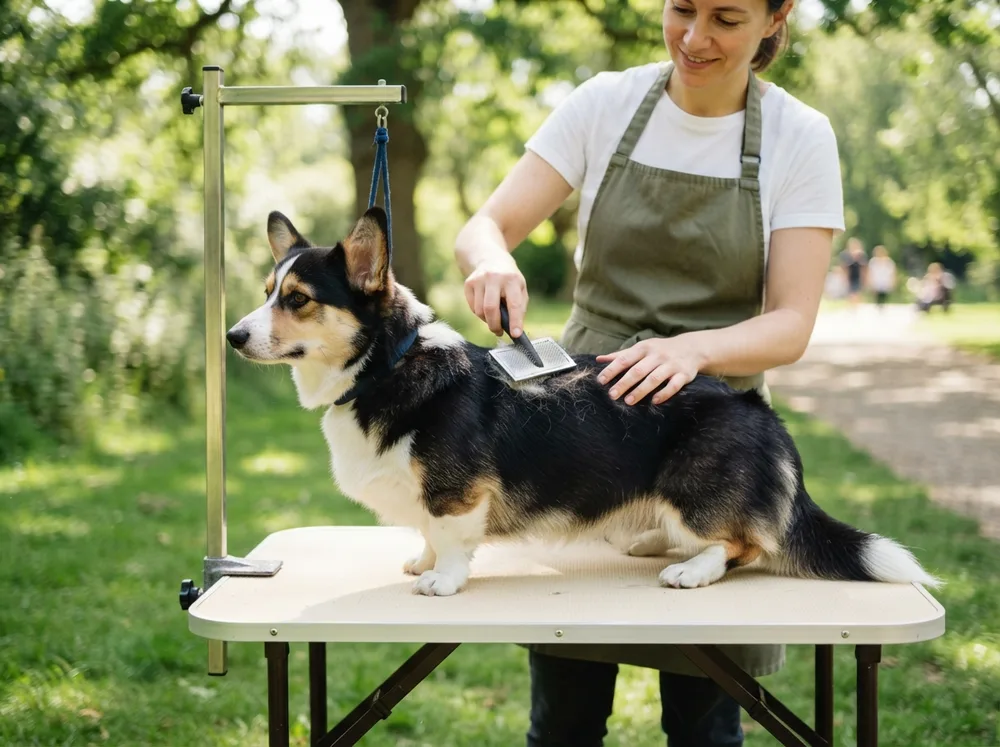
How often does a corgi need grooming?
Brush 3x weekly (daily during blows), bathe every 4–6 weeks with a full blow-dry to the skin, nails every 3–4 weeks, ears checked and teeth brushed weekly. Groomers are optional (~$80–$120/session) for desheds and fluffy dematting. Standing order for any salon: tidy-trims only, never clip or shave the double coat.
The whole calendar on one card
Corgi grooming questions arrive one at a time, how often to bathe, when to do nails, does the ear need anything, but the workable answer is a single integrated calendar, so here it is, tuned for Singapore's humidity and the breed's double coat. Several times weekly: the fifteen-minute brushing session (rake, slicker, comb, three times a week standard, four for fluffies) that our deshedding guide details, plus a thirty-second paw glance after wet walks.
Weekly: a proper once-over, ears checked, teeth brushed at least this often though more is better, paws and pads inspected, a comb audit of the mat zones. Monthly-ish: the bath, every four to six weeks in normal coat, and the nail trim, every three to four weeks, both flexing with the individual dog. Per coat blow: daily short brushes and one bath-and-blow-dry. Yearly: the vet looks at everything anyway, teeth, skin, ears, at the annual visit, which backstops the whole system.
Everything below unpacks the cadences that people get wrong most, and the one they get catastrophically wrong, which remains: no clippers, no shaving, not in any month, for any reason short of a vet's medical instruction. The double coat is climate equipment. Our shedding pillar carries the physics.
The cadence card
- Brush: 3x weekly (4x fluffy), daily in blows
- Bath: every 4–6 weeks + one per blow
- Nails: every 3–4 weeks
- Ears: check weekly, clean when needed
- Teeth: weekly minimum, daily ideal
- Groomer: optional, ~per blow or quarterly
- Shave: never
Baths: less often than the humidity tempts you
Tropical instinct says a hot sticky dog needs frequent washing, and the coat disagrees. A double coat carries natural oils that keep the undercoat lofted and the guard hairs weatherproof; over-bathing strips them, leaving a dry, itchy dog whose coat sheds worse and smells sooner, the exact opposite of the goal.
The cadence that works here: a proper bath every four to six weeks, plus the strategic mid-blow bath, plus rinse-only showers (plain water, no shampoo) after beach days or serious mud, which handle salt and dirt without touching the oil economy. Use a gentle dog shampoo, never human products, the skin pH differs, and spend twice as long rinsing as lathering, because residue is the number one cause of the post-bath itch owners blame on the shampoo brand.
Drying is the step Singapore punishes skipping. A damp undercoat in this humidity stays damp for many hours, and a chronically damp undercoat invites hot spots and that unmistakable wet-dog funk that no candle defeats. Towel hard, then blow-dry on cool-to-low-warm while brushing until the undercoat, not just the surface, is dry to the skin; part the coat and touch to check.
This doubles as fur harvesting, the dryer releases loose undercoat beautifully, and dogs conditioned to the dryer from puppyhood treat the whole event as a spa appointment. Fluffies: everything above, plus extra drying time in the feathering and a comb-through afterwards, since damp feathering mats overnight.
Wash the dog less than the weather suggests, and dry it more thoroughly than feels necessary. The coat pays both favours back.
Nails, ears, teeth, paws: the small jobs that prevent the big bills
Nails every three to four weeks, and the deadline is audible: clicking on the tile means overdue. Overlong nails change gait, and on a long-backed breed, gait changes tax the spine, so this cosmetic-looking chore is actually chassis maintenance. Corgi nails are mostly dark, so trim slivers off the tip rather than gambling on the quick's position, or use a grinder for control; puppies whose paws were handled in week-one conditioning make this a two-minute job for life, which is exactly why our free first training session includes handling drills.
Ears: the corgi's upright satellite dishes ventilate well, which spares the breed the chronic infections of floppy-eared dogs, so the job is a weekly look-and-sniff, clean pink and odourless is a pass, and a wipe of the visible bowl with a vet-approved ear cleaner only when there is visible wax. Redness, yeasty smell, head-shaking or scratching: vet, not cotton buds, and never anything poked into the canal.
Teeth are the cadence most owners quietly drop and most vets loudly regret: weekly brushing is the floor, several times weekly is the honest target, with dog toothpaste (never human) on a finger brush, thirty seconds a side, dental disease is among the most common vet findings in small-to-medium breeds by middle age, and the brush is dramatically cheaper than the dental.
Paws in this climate want a quick check after wet walks, between the pads, where trapped moisture and grit start irritation, and a trim of the pad-tuft fur if it mops the floor (on fluffies, it will). That is also the moment you catch the hot pavement burn you prevented with the seven-second test from our exercise guide. Small jobs, small minutes, and collectively they are the difference between a grooming budget and a vet budget.
DIY vs the groomer, and what it all costs
Here is the honest division of labour. You can run the entire system at home, brushing, baths, drying, nails, ears, teeth, with under a hundred dollars of gear (rake, slicker, comb, nail tool, dryer you already own, shampoo), and the starter kit every puppy leaves us with covers the day-one basics.
The groomer earns their fee in three scenarios: the mid-blow professional deshed ($80 to $120) if your bathroom cannot host the fur event; dematting on fluffies that got a fortnight ahead of the comb; and the quarterly full-service session, bath, dry, nails, sanitary trim, tidy of paw and britches fur, for owners who would rather buy the afternoon back, at similar money. All three are conveniences, not requirements; plenty of our hundred-plus placements never see a salon.
Whichever route you take, give the groomer one standing instruction in writing: tidy-trims only, no clipping, no shaving. "Deshedding packages" at some salons quietly include a clipper pass, and a well-meaning booking can undo the coat for seasons. A good Singapore groomer will nod before you finish the sentence; a hesitant one just told you everything.
Start whatever cadence you choose early, puppy-month sessions are short, treat-heavy rehearsals, and the adult dog inherits the calendar as routine rather than event. The whole apparatus, home or salon, costs a few hundred dollars a year and fifteen-minute parcels of your week; the coat it maintains is the breed's climate suit, spine guard and best photograph, all at once.
Keep exploring
Frequently asked questions
How often should a corgi be groomed overall?
Brush three times weekly (four for fluffies, daily in coat blows), bathe every 4–6 weeks plus once mid-blow, nails every 3–4 weeks, ears checked weekly, teeth brushed weekly minimum. Professional grooming is optional convenience, not requirement.
How often should I bathe a corgi in Singapore?
Every four to six weeks with a gentle dog shampoo, plus water-only rinses after beach or mud days. More frequent washing strips coat oils and worsens both shedding and smell. Always dry to the skin.
How do I trim dark nails safely?
Slivers off the tip every three to four weeks, or a grinder for control; clicking on tile means overdue. Handled-paw conditioning from puppyhood makes it a two-minute job.
Do corgi ears need much care?
Mercifully little: upright ears ventilate well. Weekly look-and-sniff; clean the visible bowl only when waxy. Redness, smell or head-shaking is a vet visit, and nothing ever goes into the canal.
Do corgis need haircuts?
No. Tidy-trims of paw tufts, sanitary areas and stray britches fur at most. Give any groomer the standing instruction in writing: no clipping, no shaving, ever.
What does professional grooming cost?
Roughly $80–$120 for a full session or deshed in Singapore. Used per-blow or quarterly it is a convenience; the entire system also runs at home on under $100 of gear.
When should grooming start for a puppy?
Week one at home: two-minute treat-heavy rehearsals of brushing, paw handling and dryer sound. The adult dog then inherits the whole calendar as routine, which is why our first-lesson trainer includes handling drills.
Meet your Corgi
Come say hello at Balestier
2 Balestier Road #01-701, Singapore 320002 · Weekdays 12pm–6pm · Weekends 10am–6pm. Or message us first: tell us about your home and routine, and we'll tell you honestly if a Corgi fits.
Still deciding?
Read the price guide first: every dollar explained, no surprises at the shop.
See the price guide